


How Schools Are Wasting Their Budgets

How Schools Are Wasting Their Budget
Schools across the UK are under more pressure than ever to justify every penny spent and rightly so. With rising costs and government funding failing to keep up, many schools across the UK are facing growing deficits, budget cuts, and the risk of compromised educational outcomes. The need for smarter and more efficient budget management is no longer just important, it’s essentialHowever, despite these financial challenges, many schools continue to prioritise the wrong areas, leading to significant, unnecessary waste in their budgets. In this blog, we’ll explore some of the most common areas where schools often waste their budgets and share some practical strategies to help you address and avoid these.
Electricity and Energy Waste:
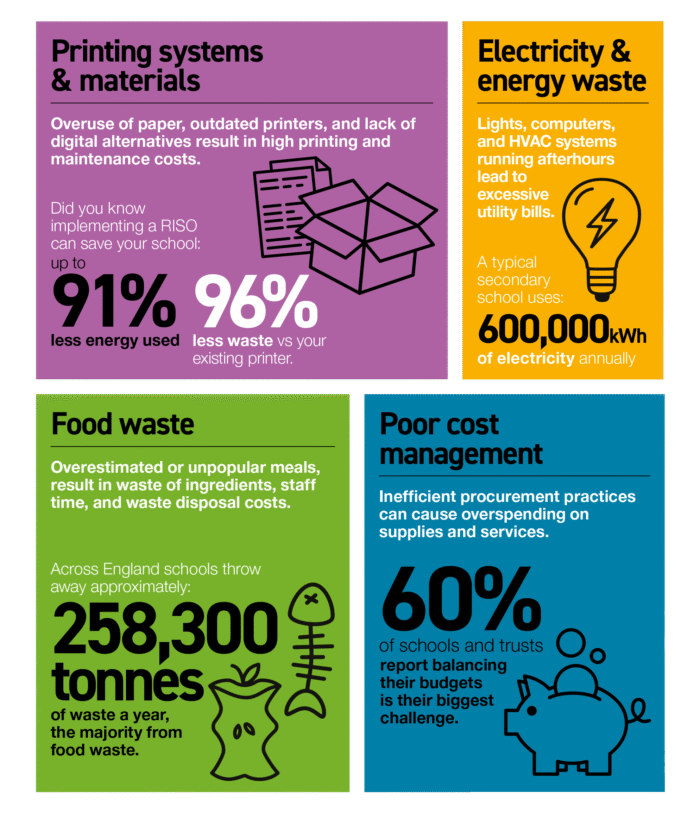
Energy waste is a significant issue across schools in the UK. A typical secondary school uses 600,000 kWh of electricity per year, and there’s no question that a large portion of that is being wasted, leading to unnecessary costs. The majority of energy used in a school is heating, lighting and technology. But with a few simple changes, schools can begin to turn this around. Switching to energy-efficient LED lights, upgrading to low-energy equipment like modern printers, and making sure devices are properly shut down after school hours and over weekends can all make a real difference. This not only helps reduce energy bills, but will also help with your sustainability efforts too.
Printing Systems & materials:
In terms of both energy and annual costs, there’s a surprising amount of waste tied up in outdated printing equipment. Many schools still rely on slow, outdated printers that consume excessive amounts of electricity and rely on costly toner or ink, expenses that quickly add up over the course of a year.
These inefficient machines don’t just increase energy bills; they also tend to break down more frequently, leading to additional costs for short-term repairs and maintenance. And over time, these hidden costs can take a serious toll on school budgets, diverting funds away from more impactful areas like teaching resources and student support.
Food Waste:
Across England, schools throw away approximately 258,300 tonnes of waste a year, and the majority of this waste is from food waste. Uneaten food isn’t just a waste issue; it highlights a key issue of poor meal planning in your school. When meal portions are overestimated or unpopular, schools waste money on the ingredients, staff time, and even the waste disposal method. You may not see this as an issue, or maybe you do, and you just don’t know how to overcome it. Unfortunately, the root of the problem (more often than not) lies in the lack of accurate tracking and resource planning.
If your school doesn’t have clear data on meal uptake, portion sizes, and student preferences, you’re left to assume food loads. Implementing better tracking systems, and smarter planning processes, your school will reduce waste and save on food costs.
Poor Cost Management:
Poor cost management goes further than just food loads in schools, it’s a systemic issue that affects a lot of areas of spending. The National Governance Association (NGA) found that 60% of schools and trusts report balancing their budgets is their biggest challenge, which is 16% higher than in 2022.
More schools than not, rely on outdated procurement processes, including paper-based records or disconnected systems, which lead to unnecessary purchases, duplicate orders, or missed opportunities for bulk savings. And there are simple changes that can be put in place, like auditing printing needs, consolidating suppliers, or using digital procurement tools, which can significantly reduce waste.
How printers are helping schools across the UK waste less:
Small, strategic changes can lead to significant savings. By taking a closer look at where money is being lost and making smarter choices around technology and resource planning, schools can stretch their budgets further and redirect funding to where it matters most: supporting students and improving learning outcomes.
Many schools across the UK are making the switch to RISO printers, and are seeing the improvements for themselves. Reduced costs, up to 96% less waste, and a more simplified printing infrastructure (plus speeds of up to 165ppm). And you can join too, but you don’t just have to take our word for it. You can get a free print audit for your school where we help you identify opportunities to save costs and show you how your new RISO printer will help you reduce waste.
https://www.riso.co.uk/education-printing.html
LINKS/Sources
https://www.barker-associates.co.uk/insights/impact-of-rising-energy-costs-on-education/